
There are very few desserts that have a name as perfectly suited to their purpose as tiramisu. The name comes from the Italian tirami su, meaning “pick me up” or “cheer me up.” Coffee, cream, mascarpone, a dusting of cocoa — it is, by design, the dessert equivalent of a warm hand on the shoulder. It has been picking people up since at least the 1970s, possibly longer, and it shows absolutely no signs of stopping.
Where It Came From (Nobody Entirely Agrees)
Here is where tiramisu gets interesting — and slightly chaotic, in the very best Italian way.
Tiramisu’s origin story is basically a beautiful Italian mess. Despite being a global icon, it didn’t even show up in a dictionary until 1980—making it younger than disco, and significantly more tasteful.
Here’s the breakdown of the “who-did-it” drama:
- The Official Version: Le Beccherie restaurant in Treviso claims the crown. Supposedly invented on Christmas Eve 1969 by Alba di Pillo and chef Roberto Linguanotto, they actually filed “official paperwork” for the recipe in 2010. Because nothing says “delicious dessert” like a notarial deed.
- The Neighborhood Feud: Naturally, the neighboring Friuli region called “fake news,” claiming they were whipping it up back in the 50s. The debate is still fiercer than a family dinner argument over who makes the best sauce.
- The Spicy Theory: Local legend suggests it was actually invented by a 19th-century brothel madam to give her clients an… ahem… “energy boost.” Historians say it’s likely a myth, but it’s certainly a more fun story than a legal document.
Whether it was born in a kitchen or a brothel, the Treviso tourist office says “Tiramisu” is now one of the top five most recognized Italian words. Whatever the truth, it’s clearly Italy’s favorite way to say, “Wake up and eat cake.”
What It Actually Is
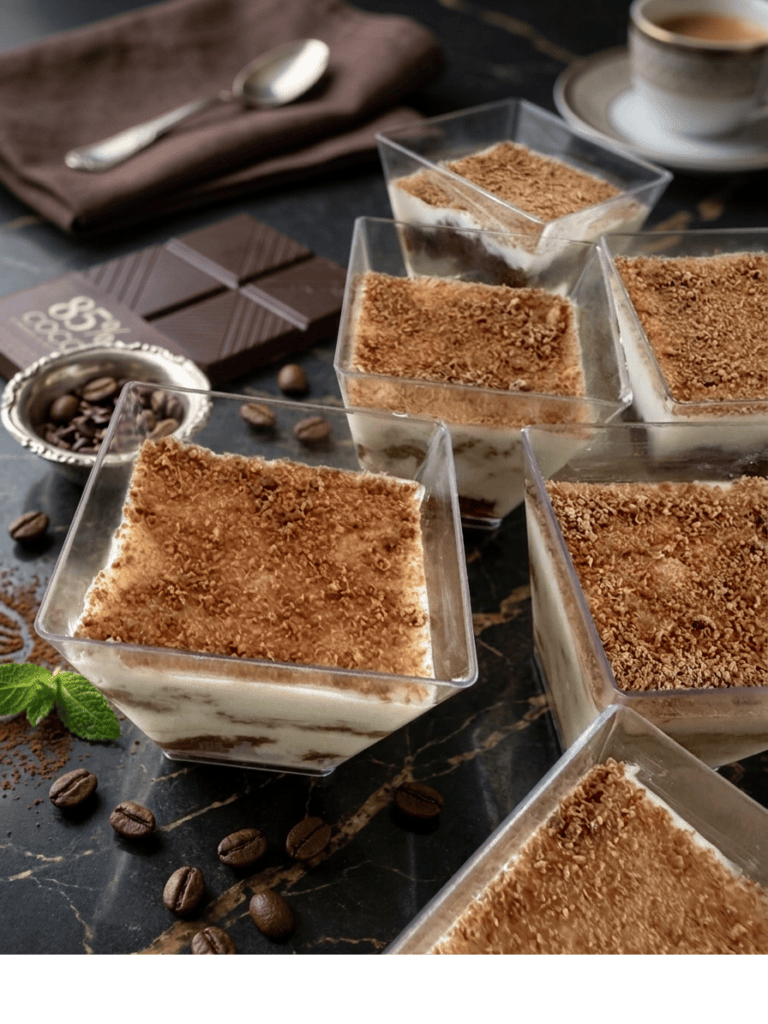
Traditional tiramisu contains ladyfingers (savoiardi), egg yolks, sugar, coffee, mascarpone, and cocoa powder. That’s it. Six ingredients, assembled in layers, and left to set. Surely, egg-free versions are hugely popular too!
The ladyfingers are baked — a light, crisp sponge finger that is the backbone of the whole thing — but the assembled tiramisu itself requires no oven. The ladyfingers are dipped briefly into strong espresso so they absorb coffee without disintegrating, then layered in a dish. A silky cloud-like strata, primarily made of mascarpone, is spread over each layer. The top is finished with a generous dusting of unsweetened cocoa powder. Repeat. Just assembly, patience, and a refrigerator.
The brilliant idea in tiramisu is not in the technique of layering, but in the components — the great invention of combining together coffee, mascarpone, and chocolate. This is the true innovation. Each element on its own is good. Together, they are extraordinary.
The Great Tiramisu Debates
For a dessert with only six traditional ingredients, tiramisu generates a remarkable amount of disagreement.
Alcohol or no alcohol? Many recipes call for marsala wine, amaretto, or a coffee liqueur mixed into the espresso. Purists — and the traditional annual competition in the Veneto region — forbid it. The question of whether to add a splash of something is one that every baker must resolve for themselves.
Raw versus cooked? The traditional recipe uses raw egg yolks beaten with sugar — no cooking involved. Some recipes call for a zabaglione base, where the yolks are cooked gently over a water bath. Others use whipped cream entirely. All produce different results. All have passionate defenders. Go egg-free and then there’s no debate to settle.
The shape question. The original tiramisu at Le Beccherie was served in a circular shape. The square shape has become the most distinct feature of modern tiramisu. A small change with enormous aesthetic consequences. Both are equally delicious.
Variations. By some estimates, at least 200 variations on the basic recipe have been published. Many replace the coffee with other ingredients such as chocolate, amaretto, lemon, strawberry, pineapple, and coconut. A mango tiramisu, a raspberry tiramisu, a matcha tiramisu — the ladyfinger is a remarkably tolerant base. Traditionalists will have opinions. The mango version will not care.
A Few Fun Facts Before You Go
- Tiramisu has its own anniversary in Italy, on March 21st. The people of Treviso also celebrate Treviso Tiramisu Day on October 3rd. Two official days for one dessert. Entirely justified.
- Treviso hosts the Tiramisu World Cup annually — a competition that takes the matter very seriously indeed.
- The word savoiardi — the Italian name for ladyfinger biscuits — comes from Savoy, the region now shared by France and Italy. They were supposedly created for a visit by the King of France in the 15th century. The ladyfinger has been royalty-adjacent since the beginning.
- Tiramisu is one of the few desserts to have an academy devoted to it — the Accademia del Tiramisù, based in Treviso, which documents its history and hosts the annual World Cup. An academy. For a dessert. Italy is doing something right.
So, What Is Tiramisu?
Six ingredients, assembled with care, set overnight, and served cold. Coffee and cream and something slightly bitter in the cocoa that keeps the whole thing from being too sweet. The kind of dessert that looks effortless and tastes like considerably more work than it was.
It is the thing on the menu that everyone orders when they can’t decide, and nobody is ever disappointed. It is the dessert that picked itself up from a small restaurant in Treviso and walked, very confidently, into the rest of the world.
Tirami su. Pick me up. It always does.
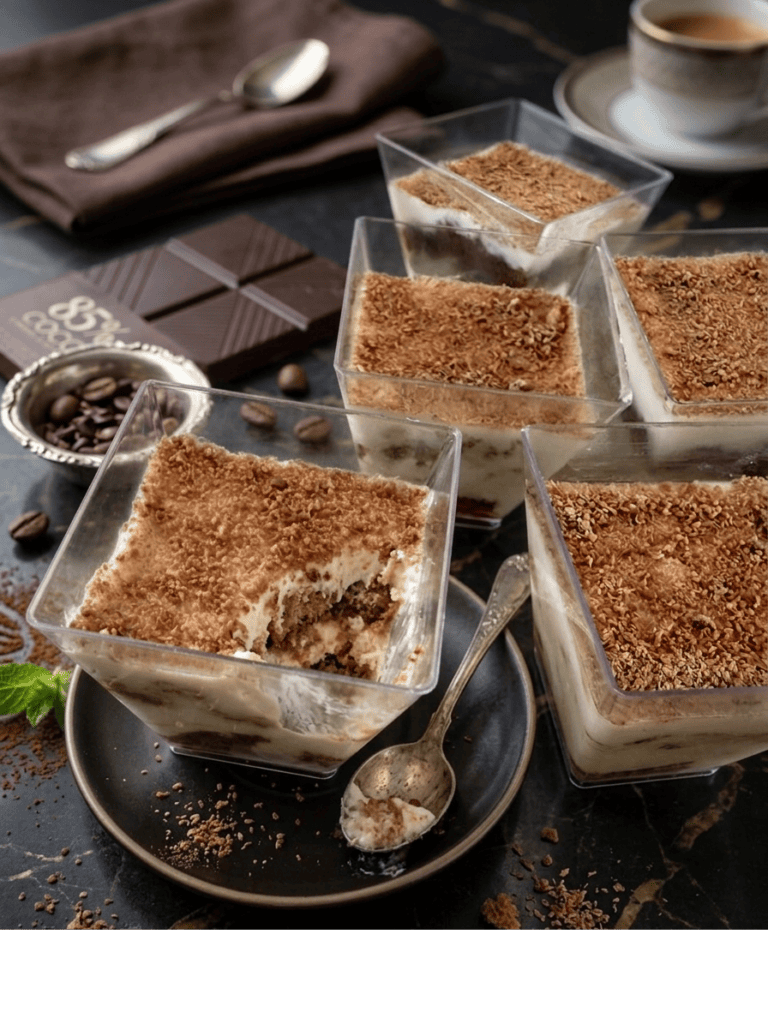
While this Tiramisu has probably, no definitely, picked you up, discover why baking is a form of love.
For those that still prefer a more cakey dessert, check out this coffee cake.