
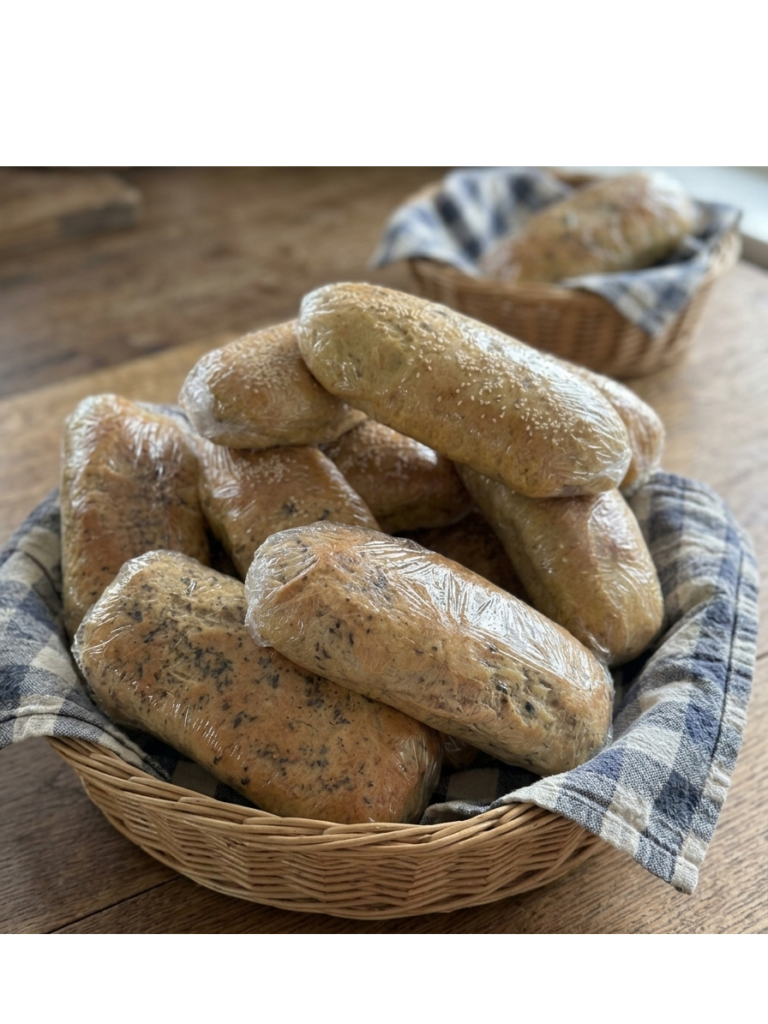
Before cake, before pastry, before any of the things this blog will get to — there was bread.
Bread is the oldest deliberately made food in human history. It predates writing. It predates agriculture. It predates, in some form, almost everything we think of as civilisation. And yet it is still, right now, the most widely consumed food on the planet. About 60 percent of the world’s population eats bread every day. If you can bake bread, you can basically bake anything. Cakes, muffins, brownies — all just bread’s fancy younger cousins who wear nicer clothes.
This is the post where we start at the very beginning.
Going back in Time, 14,000 Years Ago (Give or Take)
Archaeologists in northeastern Jordan discovered charred crumbs of a flatbread made by Natufian hunter-gatherers, using wild grains, dating back roughly 14,600 years — thousands of years before the invention of agriculture. Meaning: humans were making bread before they even thought to grow the grain deliberately. Bread did not follow civilization. Bread came first. And possibly built a civilization around it!
By around 3,000 B.C., ancient Egypt had taken things considerably further. Someone — let’s call him George — left dough out too long. Wild yeast from the air found it. The dough fermented and, when baked, it rose — lighter, airier, and more delicious than anything before it. George was onto something. The Egyptians ran with it, developing dozens of varieties, using bread and beer as currency to pay the workers who built the pyramids, and offering it to their gods. In Egyptian Arabic, the word for bread is still aish — meaning life. Say no more, George. Say no more.
From Flatbread to Empire
As bread travelled across the ancient world, it gathered meaning wherever it went. The Sumerians documented over 30 types of bread on cuneiform tablets as early as 2,500 B.C. The Greeks made it a cultural touchstone — the word for everything eaten alongside bread was opson, meaning accompaniment, which is to say: bread was the meal, and everything else was a side.
The Romans industrialised it. By the time of Augustus, there were 329 bakeries in Rome alone. Bread was so politically important that the Roman government distributed free grain to citizens — the famous panem et circenses, bread and circuses — understanding that a hungry populace was an ungovernable one.
Here’s an interesting snippet. In medieval Europe, a thick slab of stale bread called a trencher was placed beneath food at meals, absorbing sauces and gravies, and eaten at the end. An edible plate! You couldn’t take it home, but you could eat it, which many would say, is arguably better. There is a theory, both charming and plausible, that pizza evolved from the trencher. The history of bread is also, in this way, the history of pizza. You’re welcome.
Bread in India: The Other Half of the Story
While the Egyptians were mastering leavened loaves, the Indus Valley civilisation was developing its own relationship with grain. Evidence suggests flatbreads similar to the roti were being made in the region as far back as the Harappan period, around 4,000 to 1,500 B.C.
The roti — kneaded from whole wheat flour and water, rolled flat, cooked on a cast-iron tawa in minutes — requires no oven, no yeast, no special equipment. Just flour, water, and fire. This simplicity is precisely why it has fed billions of people across India, Pakistan, Bangladesh, and Nepal at every meal for thousands of years. In countless homes today, the sound of hands working roti dough is still the sound of morning.
The naan arrived later, travelling to India from Persia via Central Asia. Refined during the Mughal era in the 16th century — enriched with yogurt, leavened with yeast, cooked in a clay tandoor at fierce heat — naan was for much of its Indian history a bread of the court. The naan was a bread of occasion; the roti was the bread of everyone.
Between the roti and the naan, the puri and the paratha, the thepla and the kulcha, the bhatura and the appam — India has one of the richest bread traditions on earth. Much more to say and explore here. We will revisit the Breads of India later.
Conversations around bread
Few foods have embedded themselves in language quite the way bread has.
To break bread with someone is to share a meal with them — and the phrase carries considerably more weight than it might first appear. Its origins lie in early Judaism, where bread was broken by hand on the Sabbath because Jewish law prohibited using knives. The tradition carried through into Christianity, where breaking and sharing bread became central to the Last Supper and, later, to the Eucharist. By the 1300s, the phrase had entered everyday English as a way to describe any shared meal, with the warm implication of peace, friendship, and trust. As the saying goes: it’s hard to remain enemies when you’ve broken bread together. Centuries old, and still true.
The greatest thing since sliced bread — the gold standard of convenience, coined in 1928 when the Chillicothe Baking Company in Missouri introduced the first commercially sliced loaf and a local newspaper called it “a forward step in the baking industry”. The phrase has since been applied to the internet, the iPhone, and at least one very good pizza slicer.
Then there’s companion — from the Latin com (together) and panis (bread). A companion is literally one with whom you share bread. Breadwinner — the person who earns the family’s keep, puts food on the table, quite literally brings home the bread. Bread and butter — the basics, the essentials, the thing you rely on.
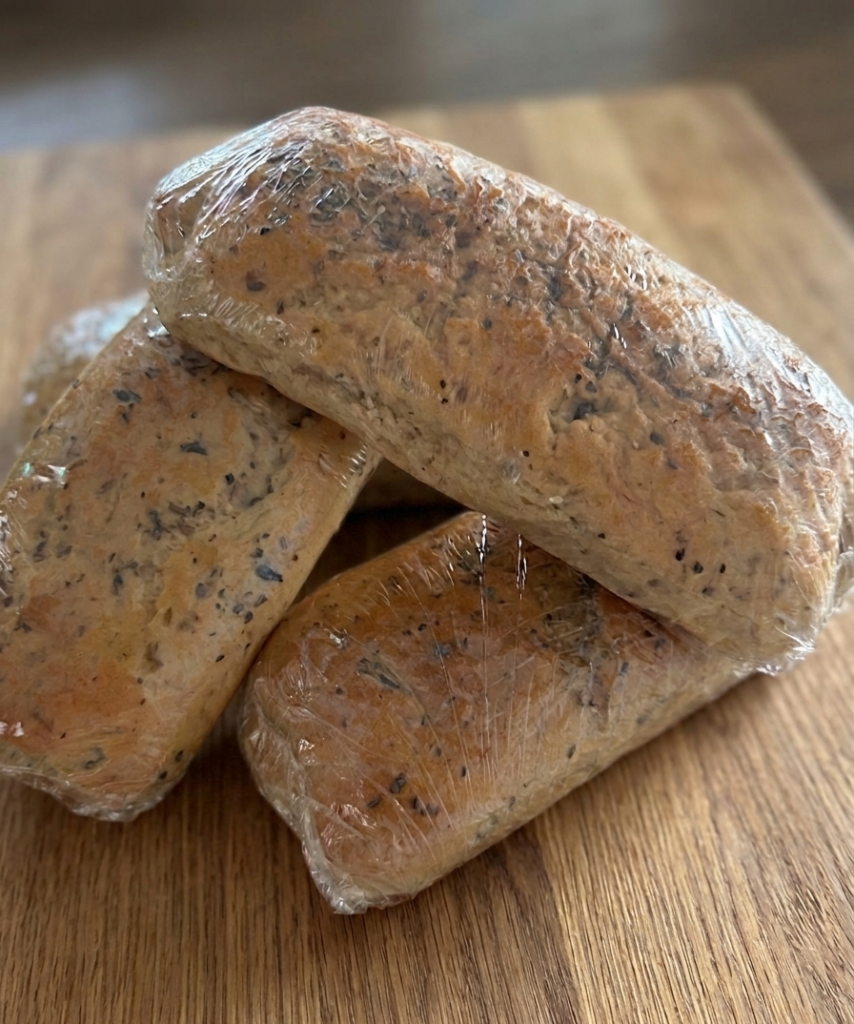
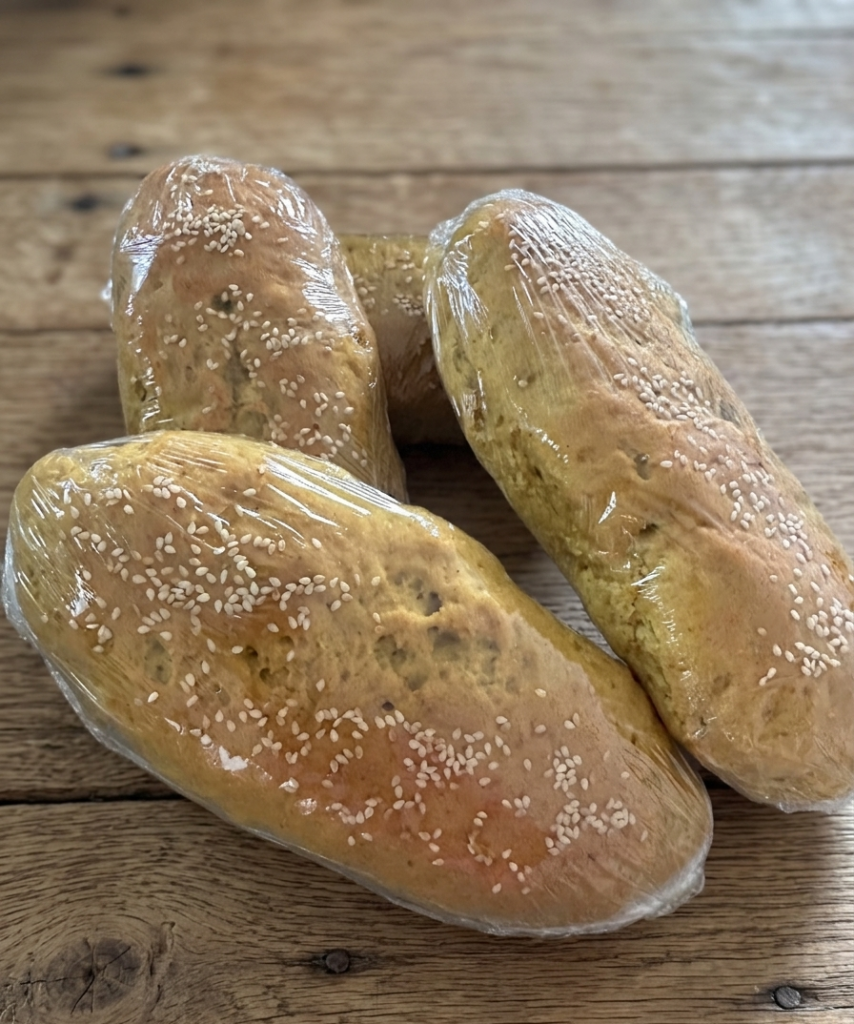
The circle of bread: From Sourdough to Industrial Loaf to the Sourdough Revival
For most of human history, bread was made at home or by a local baker, using a sourdough starter passed down through families like a living heirloom.
The Industrial Revolution changed this completely. Steam-powered mills, mechanical kneading machines, and factory bakeries made bread faster and cheaper than ever. In 1961, the Chorleywood process cut fermentation time from hours to minutes using intense mechanical mixing. Most mass-produced bread in the world today uses some version of this process.
And then, quietly and with considerable conviction, the sourdough revival began. What started as a niche interest became, particularly during the pandemic lockdowns of 2020, a global movement. People started feeding starters, measuring hydration ratios, and waiting 48 hours for a loaf with the patience of someone who had nowhere else to be. Which, in 2020, they did.
Alongside this, the rise of gluten intolerance and coeliac diagnoses has driven genuine innovation in what bread can be made from —rice flour, almond flour, buckwheat, teff, cassava, chickpea flour, and oat flour all now have their place on bakery shelves. Gluten-free bread has come a long way from the early versions that tasted primarily of disappointment. Keto and low-carb diets have pushed the boundaries further still, producing breads made largely from seeds, nuts, and cheese. Ancient grains like spelt, emmer, and einkorn — the same grains Egyptian bakers were using 5,000 years ago — have made a comeback, prized for their nutrition and their deeper, nuttier flavour. Bread, in other words, is not done evolving. It never has been.
Baking Bread – FAQs and Fixes
Even after 14,000 years of bread-making, beginners still run into the same problems, as so the most experienced ones. Here are the most common mistakes and how to fix them before you lose your cool with the oven.
Question: Why is my bread dense ?
Reason: Usually means not enough kneading, dead yeast, or too little hydration.
Fix: Your dough needs you, please knead it well. If you’re using active dry yeast, proof it in warm water with a pinch of sugar first. If it doesn’t bubble after ten minutes, your yeast is dead. Dump it and start again. No shame — it happens to everyone.
Question: Why didn’t my sourdough rise ?
Reason: Your starter isn’t active enough, the proofing time is too short, or the kitchen is too cold.
Fix: Feed your starter four to six hours before using, and proof the dough somewhere warm.
Question: Why is my bread crust too hard ?
Reason: Oven temperature too high, or no steam.
Fix: Add a small pan of water to the bottom of the oven while baking — steam is the secret weapon for a good crust, and it costs nothing.
Question: Why is bread is gummy inside, even though its baked well?
Reason: You cut your bread too soon.
Fix: Wait at least an hour or two hours before slicing. I know, after waiting for it to rise and bake, this calls for yet more patience. This is the hardest instruction in all of bread-baking, and also the most important. The bread will still be there in two hours, probably.
Question: Why is my bread dough impossibly sticky?
Reason: Your dough may be too wet.
Fix: Add flour one tablespoon at a time while kneading — not all at once. Work the dough a little and knead with love.
A Few Fun Facts Before You Go
- The toaster was invented in 1893. Sliced bread was invented in 1928. For 35 years, people had a toaster and nothing to do with it.
- It takes nine seconds for a combine harvester to harvest enough wheat to make approximately 70 loaves of bread.
- Early Egyptians sent their children to school with bread and beer for lunch. The beer was weak and used as a safe alternative to contaminated water. Probably fine.
- The longest loaf of bread ever baked measured over 1.5 kilometres, baked in Portugal in 2005 by approximately 160 bakers.
- Research found that 89 percent of people said the smell of freshly baked bread made them happy. Science, confirming what every bakery has always known.
So, What Is Bread?
At its most basic level: flour, water, and heat. Sometimes yeast. Sometimes salt. Nothing else is strictly required.
At its most expansive: the food that made settled civilisation possible. The currency of Egyptian labourers and Roman emperors. The thing at the root of the word companion. The sound of morning in a South Asian kitchen. The act of peace embedded in the phrase breaking bread.
The hype about baking your own loaf is not really about the bread. It is about wanting to make something slow and real with your hands — to connect with a process 14,000 years old, to pull something warm from the oven and feel briefly, profoundly capable. The kneading, the proofing, the rising, the shaping and eventually baking, the process is almost theraputic, bringing a sense of calm and patience to an otherwise normally chaotic day. Ultimately, the bread is almost beside the point. Well, almost.
Bread is not just the beginning of baking. It is the beginning of everything.
Equally facinated by cakes? Here’s my take on cake.
Is bread your comfort food too? Let us know your favourite way to enjoy bread, comment below or leave us a message!