(And We Absolutely Will! )
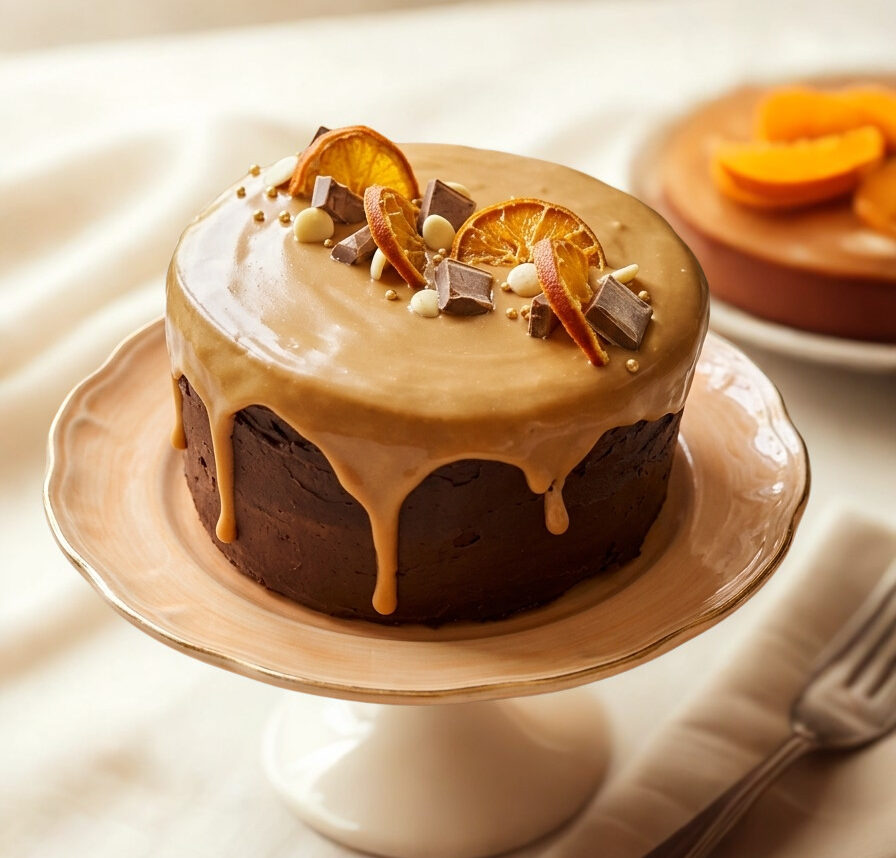
There are very few problems in life that a slice of cake cannot, at the very least, soften. Bad day at work? Cake. Celebrating something wonderful? Cake. Just Tuesday and feeling a little peckish? Also cake — no explanation required.
But for something so universally beloved, cake has had a surprisingly long and winding road to get to your plate. Let’s take a little trip, shall we?
It Started With Bread
The word “cake” itself comes from the Old Norse word kaka — a Viking contribution to the English language, of all things. Which means every time you cut yourself a slice, you’re honouring centuries of Scandinavian culinary ambition.
The earliest cakes — if we can even call them that — date back to ancient Egypt, around 3,000 to 5,000 years ago. They were sweetened breads, dense and honey-dipped, and almost nothing like what we’d recognise today. The Romans then took things a step further, adding eggs and butter to the mix, and suddenly things started getting interesting.For a long time, the main difference between a “cake” and a “bread” in medieval England was almost embarrassingly simple: the shape (round and flat) and the fact that cakes were flipped over while cooking. That’s it. The dividing line between bread and cake was essentially: did you flip it?
Lets just say, cake is basically bread that had bigger dreams.
Sugar Changes Everything
By the medieval period, as sugar began making its way into European kitchens, cakes started evolving into something more recognisable. They were dense, packed with dried fruits, nuts, and spices — and they were very much a luxury item, reserved for the wealthy and served at banquets and royal feasts.
In other words: for most of history, cake was not for everyone. It was a symbol of status, a flex, if you will. It wasn’t until the 17th and 18th centuries — with advances in baking technology, more reliable ovens, and increasingly accessible ingredients — that cakes started lightening up, literally. Beaten eggs replaced yeast as a leavening agent. Refined sugar became cheaper. Cake moulds and hoops gave bakers more control over shape, and eventually gave rise to the cake tins we use today.
The sponge cake as we know it has a rather lovely origin story: a pastry chef from Genoa, Italy, visiting Spain, adapted the génoise into a fatless sponge for a royal banquet. It was later called pan di Spagna — bread of Spain — in honour of where it was first served. A little Italian, a little Spanish. A collaboration for the ages.
Cake Ventures Beyond The Palace Gate
For a long time, making a proper cake required skill, time, expensive ingredients, and a reliable oven. Not exactly accessible to everyone. Then came the Industrial Revolution, which made ingredients like baking powder and refined flour more affordable and widely available. Suddenly, cake wasn’t just for the gentry. And with the invention of temperature-controlled ovens, bakers no longer had to hover anxiously, poking at things and hoping for the best.
The 20th century brought the next great leap: the box cake mix. The first commercial cake mix appeared in the 1920s, but it was General Mills and its Betty Crocker brand that made it a household staple in the 1940s. Interestingly, when sales slumped in the 1950s, marketers figured out that people felt the mix made things too easy — so they reformulated it to require the addition of a fresh egg. Suddenly, home bakers felt like they were contributing something. Sales soared.
A reminder that sometimes, people just need to feel involved. Or add their personal touch.
Enter: The Birthday Cake

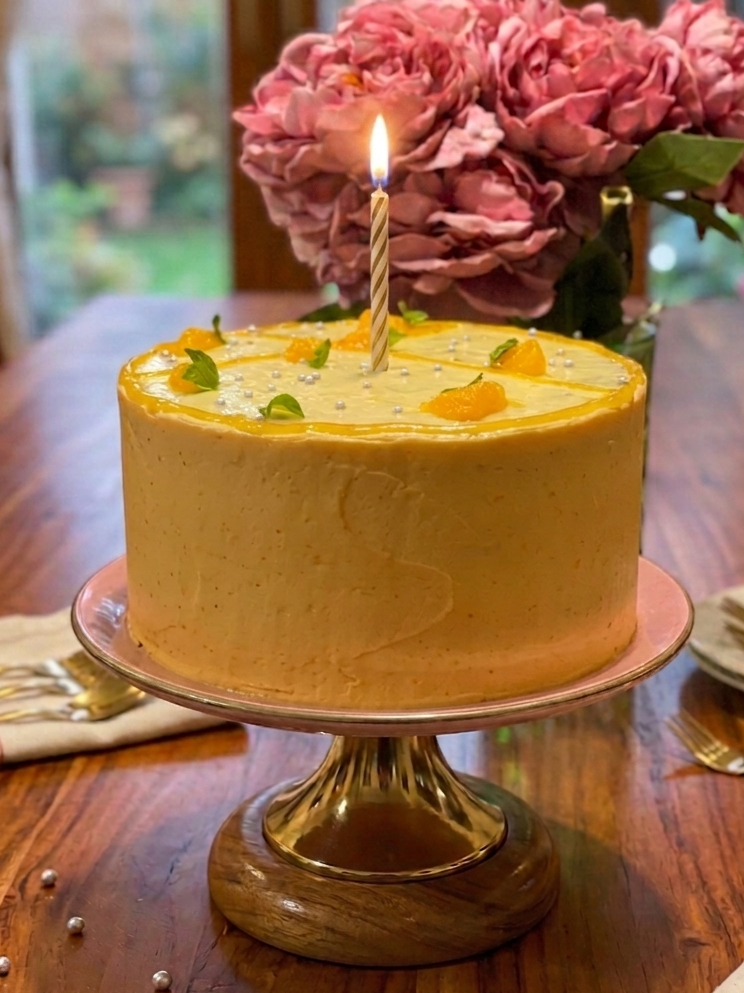
At some point, humans collectively decided that the best way to mark another year of existence was with a round, frosted, candle-covered cake. And, honestly? Quite an inspired decision. There’s actually a rather charming theory behind the round shape: some ancient civilisations baked round cakes as offerings to their gods, believing the circle symbolised the sun, the moon, and the cyclical nature of life. So when you blow out your birthday candles, you’re participating in a thousands-year-old ritual. No pressure.
The tradition of placing candles on birthday cakes is widely credited to the Germans, who celebrated Kinderfeste — a birthday party for children — with a cake and lit candles representing the years of life. Over time, the custom spread, softened, and became the universal celebration we know today. Birthday cakes and candles go hand in hand.
In India, birthday cake culture arrived with the colonial era but was adopted with characteristic enthusiasm. Today, no Indian birthday is complete without a cake — and the ritual of cutting the cake has taken on a life of its own. We sing louder, we smear frosting on the birthday person’s face (a tradition that exists nowhere in the original European blueprint, but here we are), and we treat the whole occasion with the gravity of a national event. Truly, India did not just adopt cake culture, India upgraded it.
But How Did Cakes Come To India ?
Baking, as a technique, was not native to India. It arrived primarily through colonial contact — first the Portuguese along the western coast (hello, Goa and your gorgeous bebinca), and then the British, who set up bakeries catering almost exclusively to their own.
But the real story — and it’s a wonderful one — begins in 1880, in the small coastal town of Thalassery in north Kerala. A businessman named Mambally Bapu, who had returned from Burma with a talent for biscuit-making, decided to open a bakery for ordinary Indians. A few years later, a British planter named Murdoch Brown walked in carrying a plum cake he’d brought from England and asked if Bapu could replicate it. Bapu agreed — and then quietly did something better. Instead of following the recipe exactly, he swapped the French brandy for a local cashew and banana brew, and threw in an array of Malabar spices — the very spices that had drawn Europeans to India’s shores in the first place. Brown tasted it, was stunned, and immediately ordered a dozen more. And that is the story of India’s first Christmas cake. Born in a small bakery on the Malabar coast, shaped by curiosity, and improved significantly by the decision to just trust the local ingredients. Today, Thalassery is considered India’s cake capital, and every December, its bakeries are so swamped with orders — from across the country and from NRIs in the US and UAE — that many of them stop accepting birthday cake orders for the entire month.
Meanwhile, in Kolkata, another chapter of India’s cake history was quietly being written. In 1902, a Baghdadi Jewish immigrant named Nahoum Israel Mordecai began selling baked goods door-to-door in the lanes of what is now New Market. His cakes were so good that they won over the British colonisers, the Anglo-Indian community, and Bengalis equally — a feat of no small significance. Nahoum & Sons still stands today, behind the same teakwood counter installed in 1916, fruit cakes and rum balls and almond tarts lined up exactly as they’ve always been. During Christmas, people queue for hours. The Archbishop of Canterbury once declared their fruit cake the finest he’d ever tasted.
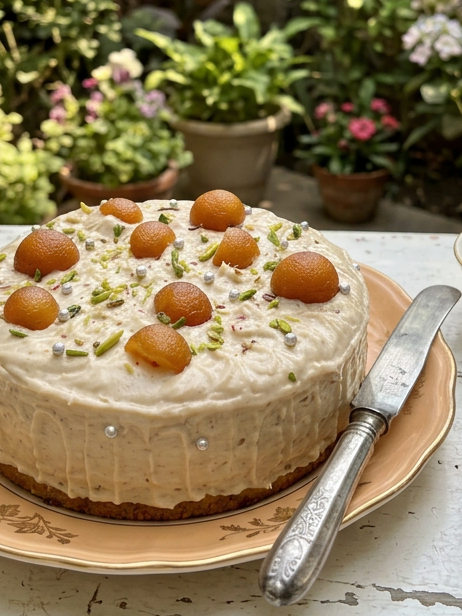
That’s the thing about cake in India: it arrived from the outside, but it was remade entirely on our own terms. And that instinct hasn’t slowed down. Today, Indian bakers are pushing the form further still — a gulab jamun cake soaked in sugar syrup and cardamom, a mango and pistachio cake that needs no justification, a Kerala cashew sponge or a northern fennel-spiced loaf that tastes like it was always meant to exist. The borders between mithai and cake, between tradition and technique, are blurring in the most delicious way possible. Somewhere, Mambally Bapu is probably nodding approvingly.
Cakes – Shining In The Silver Screen
Some of the most memorable movie moments involve cake, which tells you everything about its emotional power. Here are three movie appearances that have really stood out for me.
Matilda (1996) gave us arguably the most iconic cake scene in cinematic history — poor Bruce Bogtrotter, forced by the terrifying Miss Trunchbull to eat an enormous chocolate cake in front of the entire school. What starts as punishment becomes a moment of pure triumph. The crowd chanting “Bruce! Bruce! Bruce!” still gives people chills. (And yes, the cake does look absolutely delicious, which makes the whole thing deeply confusing emotionally.)
Marie Antoinette (2006) — Sofia Coppola’s lush, anachronistic portrait of the doomed queen — features cake in almost every other frame, set to pop music and soaked in champagne. Whether or not Marie Antoinette actually said “Let them eat cake,” the phrase has followed her through history, and Coppola leaned into it gloriously.
Harry Potter and the Philosopher’s Stone (2001) has Hagrid arriving at the hut on the rock with a lopsided, pink-frosted birthday cake for Harry — a small, wonderful moment of warmth in an otherwise dramatic evening. Every Indian kid who grew up reading Harry Potter and then watched that scene understood it immediately. An imperfect cake made with effort hits differently than a perfect one made without it. Talk about the love behind the baking!
Time For some cake talk
Two of the most recognisable phrases in the English language that involve cake are worth knowing.
“Let them eat cake” is almost universally credited to Marie Antoinette — the French queen who supposedly, upon learning the peasants had no bread, suggested they eat cake instead. Encapsulating oblivious privilege, but almost certainly not true. The phrase traces back to philosopher Jean-Jacques Rousseau, who wrote it in 1765 attributed to “a great princess” — when Marie Antoinette was nine years old and living in Austria. Some have offered a kinder reading: that the original French word, brioche, referred to spare dough scraped from bakers’ ovens and left out for the poor — practical advice, not callousness. Historians remain unconvinced.
“You can’t have your cake and eat it too” is older and less dramatic — first recorded in a letter from 1538, making it nearly 500 years old. The logic is surprisingly sound: once you eat the cake, you no longer have it. You must choose. Interestingly, the original phrasing was the other way around — “you cannot eat your cake and have your cake” — which makes considerably more sense. The version we use today quietly broke the logic somewhere along the way. Fitting, really, for cake.
A Few Fun Facts Before You Go
- The word gateau is simply the French word for cake — borrowed into English in the mid-19th century and now used to refer to especially elaborate, cream-filled creations.
- Torte is the German equivalent — typically rich, multilayered, and made with ground nuts or breadcrumbs instead of flour.
- The ancient Romans had a word for a cake with a pastry base: placenta. Yes, really. Try saying that one at the bakery counter.
- The precursors to our modern round iced cakes were first baked in Europe in the mid-17th century. Before that, icing as we know it didn’t really exist — the earliest versions were boiled sugar mixtures poured over the cake and hardened in the oven.
- India’s cake market, which began in a small Thalassery bakery in the 1880s, is projected to grow to $31.5 billion by 2033. Mambally Bapu would be pleased.
So, What Is Cake, Really?
At its heart, cake is flour, fat, sweetener, eggs, and a leavening agent — a batter baked until it transforms into something soft, sweet, and celebratory. But, it’s also a lot more than that.
It’s the thing on the table at every birthday, wedding, and milestone worth marking — whether it’s the ultimate mawa cake from an Irani café, or a dense, spiced plum cake wrapped in paper from a Kerala bakery in December, or a simple sponge picked up on the way home because someone in the family deserves something sweet today. It’s Bruce Bogtrotter eating his way to glory, and Hagrid squashing a pink candle onto a lopsided sponge because he wanted to do something kind. It’s Mambally Bapu in his Thalassery kitchen, reaching for the local spices instead of the imported brandy, and quietly making history.
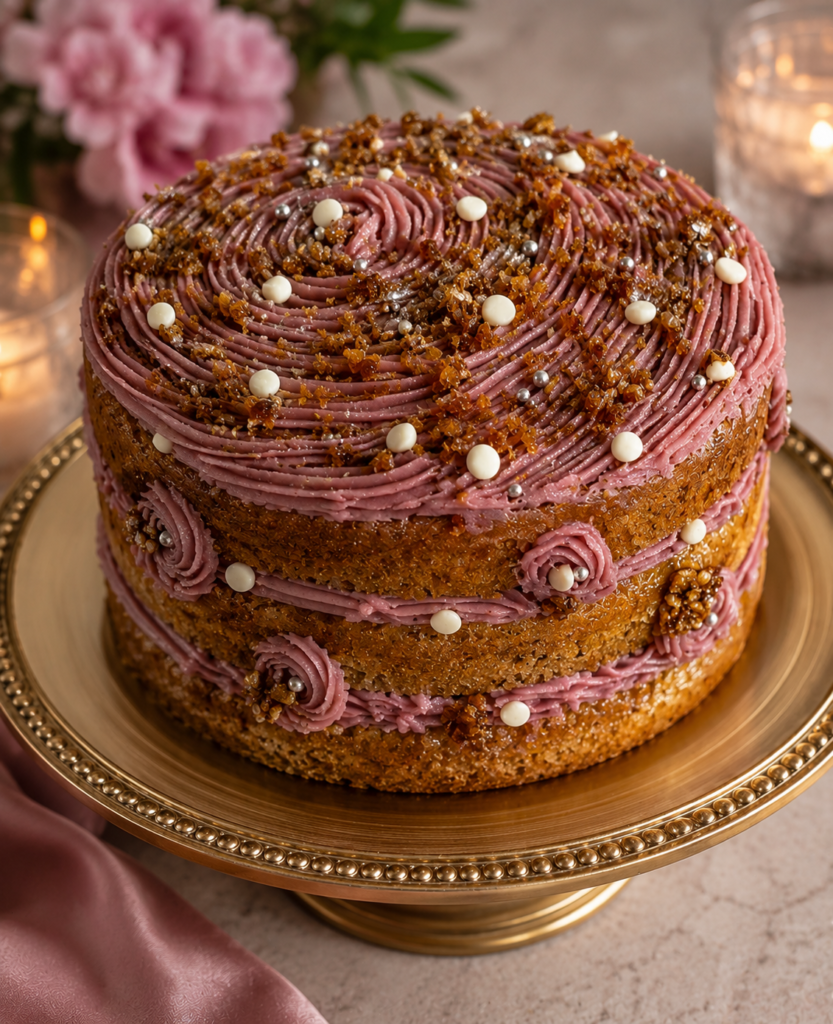
As professor and author Nicola Humble once wrote, cake is “one of those foodstuffs whose symbolic function can completely overwhelm its actual status as something to eat. More than anything, cake is an idea.”
And it’s a very, very good idea. I’d argue, in most cases, even the best idea!